
A new cat is coming home, and the shopping list keeps growing. Cat trees, fountains, fancy toys. Where do you even start?
Start small. A few things matter on day one, and the rest can wait until you know what your cat likes. This guide splits the list into both, with simple tips on size and placement. We sell cat gear, but a new cat needs far less than a store aisle suggests.
Key Takeaways
- Day one needs eight things. Litter and a tray, bowls, a carrier, a bed, a scratching post, toys, an ID plan and food.
- Buy a roomy tray. International Cat Care says the ideal length is about one and a half times your cat’s length.
- Keep the litter tray away from food and water, in a quiet spot.
- Set up one quiet room before your cat arrives, then open up the rest of the home when they settle.
- Ask your vet about food, microchipping and a first check-up.
The Day-One Shopping List
Eight things cover the first week. International Cat Care’s guide to preparing for a new cat lists the same basics. They are a litter tray, bed, bowls, safe places, a carrier, toys, identification and a scratching post.
| Item | What to look for | Can wait |
|---|---|---|
| Litter tray and litter | A roomy tray, and the litter your cat already knows | Extra trays, litter-box furniture |
| Food and water bowls | Wide, shallow bowls in ceramic or glass | Fountains, automatic feeders |
| Carrier | Secure, and easy to get your cat in and out of | A second carrier |
| Bed or hiding spot | A soft, clean place, ideally off the floor | Cat trees, window perches |
| Scratching post | Sturdy, tall enough to stretch against, rough surface | Several styles |
| Toys | A few simple ones you can play with together | Big toy sets |
| ID plan | A microchip or an ID tag; ask your vet | Fancy collars |
| Food | What your cat is eating now; ask your vet | Treats and toppers |
Want it on paper? Download our printable New Cat Checklist (PDF). It has tick boxes, a room layout and space for your vet’s details.
A Litter Tray and Litter
Size matters more than most people expect. International Cat Care says the ideal tray is about one and a half times your cat’s length, measured from nose to base of tail. It also says many standard trays are too small.
Open or covered? There’s no single rule. Covered trays can be harder to keep clean and may make some cats feel vulnerable, so try both if you’re unsure. We sell an open litter box with removable high sides and a scoop. The large size is 52 cm (20.5 in) long and is listed for adult cats under 20 lb. If your cat’s length times 1.5 is more than that, you’ll want a bigger tray.
Where to Put It
Choose a quiet corner, away from food, water and busy areas. Avoid spots next to a cat flap or a full-length window. Cats don’t like to eat close to where they toilet, so keep the food bowl on the opposite side of the room.
Litter
Ask the shelter or breeder what your cat uses now, and buy the same. International Cat Care suggests about 3 cm (1 in) of litter and notes that scented litters can put cats off. Scoop at least twice a day.
A mat under the tray catches stray litter. Browse our Grooming & Litter category for litter mats.
One tray is plenty to start with for one cat. If you have more than one cat, the rule is one tray each, plus one extra.
Food and Water Bowls
Most cats prefer glass or ceramic bowls, according to International Cat Care, and wide, shallow ones are best. It suggests avoiding double feeders, so give food and water their own bowls. Keep the water away from both the food and the litter tray.
Our ceramic cat bowl comes in two sizes and as a single bowl. The ASPCA says to wash and refill water bowls daily, so a second bowl you can swap is handy.
For food, ask the shelter or your vet what your cat is eating, and keep it the same at first. Your vet can help you choose the right food as your cat settles in.
A Carrier for the Trip Home
A carrier is not optional. International Cat Care calls it essential for vet trips and for bringing your new cat home. It should be secure and easy to get your cat in and out of.
Our backpack carrier measures 30 x 25 x 35 cm (11.8 x 9.8 x 13.8 in) and suits a small cat. Check that your cat fits comfortably before you order.
Once you’re home, leave the carrier open in the quiet room. That way it feels familiar before the next trip. Keep an eye on your cat while they’re being carried.
A Bed and a Place to Hide
The ASPCA says your cat needs a clean, dry place of their own to rest. Line it with a soft blanket or towel. International Cat Care adds that cats feel safer higher up, and that hiding spots matter most for nervous cats. If your cat hides, let them.
A cardboard box with a towel works well and costs nothing. Want something cozier? Our fleece cave bed is a semi-enclosed nest with a pillow. The nest measures 42 x 37 x 32 cm (16.5 x 14.6 x 12.6 in).
A Scratching Post
Scratching is normal cat behavior, so give it a home. The ASPCA says a post should be at least three feet (91 cm) tall and sturdy enough not to wobble. It suggests a rough cover such as sisal.
It also suggests offering a few surfaces, such as cardboard, carpet, wood and sisal, then adding more of whichever your cat likes. Put the post where your cat already wants to scratch.
Our wooden scratcher with a sisal ball is a low scratcher, not a three-foot post, so it works as a second spot. Our Beds & Furniture category also has taller sisal towers.
Trim your cat’s nails every two to three weeks, as the ASPCA suggests. If you’re unsure how, ask your vet or a groomer to show you.
A Few Toys
Keep it simple. Two or three toys are enough to start, and you can rotate them. A wand toy lets you play together.
Look through our Cat Toys for tunnels, balls and wands. Supervise play, and put away anything with strings or small parts when you’re not there. For ideas, see our guide to five toys to keep indoor cats busy.
An ID Plan
The ASPCA recommends an ID tag or a microchip for cats, indoor ones included. International Cat Care recommends microchipping all cats. Ask your vet which suits your cat, and about getting it done at the first visit.
A collar is optional. If you’d like one, our adjustable cat collar with a bell and safety buckle fits necks from 15 to 30 cm (5.9 to 11.8 in). It has no ID tag. Supervise your cat the first time they wear it.
Set Up One Quiet Room First
Before your cat arrives, set up a single room. It gives them a small, calm place to settle before they meet the whole home.
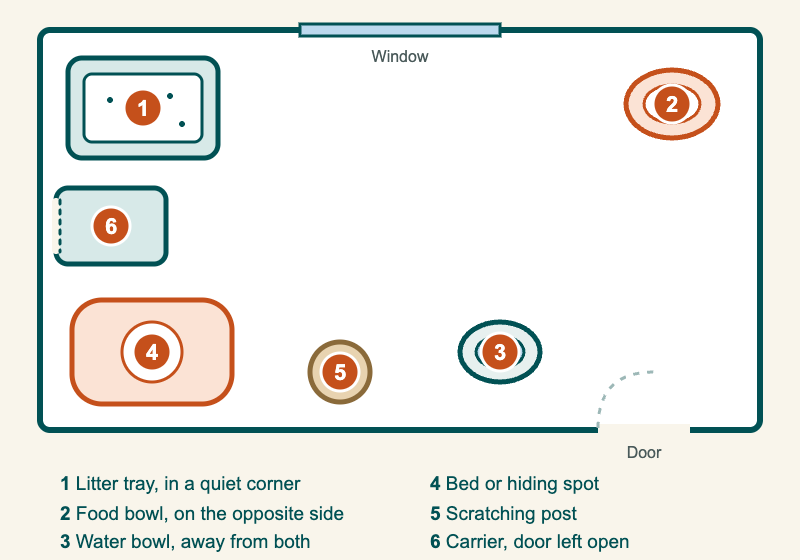
- Put the litter tray in one corner.
- Put the food bowl on the opposite side of the room.
- Put the water bowl away from both.
- Add the bed or hiding spot, the scratching post and a toy or two.
- Leave the carrier open in the room.
Check the room for hazards, like trailing cords and anything breakable. Ask your vet which houseplants are unsafe for cats.
Let your cat set the pace. Open the door to the rest of the home when they seem relaxed and curious.
What Can Wait
You don’t need everything on day one. Cat trees, window perches, fountains, harnesses and big toy sets are all fine to add later. So are fancy treats.
Wait to see what your cat likes first. One cat loves a high perch, and another just wants a cardboard box. Buying after a week or two means you’ll buy the right thing.
Because our items ship from overseas warehouses, each product page shows an estimated delivery range. Order the day-one items early so they arrive before your cat does.
Quick Answers
How many litter trays does a new cat need?
International Cat Care says one per cat, plus one extra, for homes with more than one cat. For a single new cat, one tray in the quiet room is a good start.
What size litter tray should I buy?
Aim for about one and a half times your cat’s length, measured from nose to base of tail. Many standard trays fall short of that.
Do I need a collar?
Not necessarily. The ASPCA recommends an ID tag or a microchip. Ask your vet which suits your cat.
Should I buy everything before the cat arrives?
Buy the day-one list, then add things as you learn what your cat likes.
The Short Version
Buy eight things. A roomy litter tray and litter, bowls, a carrier, a bed, a scratching post, a few toys, an ID plan and food. Set up one quiet room and keep the litter away from the food. Ask your vet about food and microchipping.
When you’re ready, browse the Cats category, or download the New Cat Checklist to take shopping. Questions? Send us a message, and our Returns & Refunds page explains what to do if something isn’t right.