
Walk into any pet aisle and you’ll find collars and harnesses side by side. Both clip a leash to your dog. So which one should you pick?
The short answer is that it depends on your dog and your walk. This guide shows who each one suits, how they should fit, and why many dogs wear both. We sell dog gear, but no gear fixes pulling by itself, and we’ll say so.
Key Takeaways
- A well-fitted chest harness is a good everyday choice for many dogs, especially those who pull.
- A flat collar is fine for ID tags and for calm walkers who don’t pull.
- Fit matters as much as the type. Measure first, and use the two-finger rule.
- Gear doesn’t teach loose-leash walking. Reward-based training does.
- If your dog has a breathing or neck problem, ask your vet before you choose.
The Short Answer
Most dogs do well with a harness for walks and a collar for ID tags. Here is a quick way to choose.
| Your dog | Start with | Why |
|---|---|---|
| Pulls or lunges | Harness | It spreads the pull across the chest instead of the neck. |
| Small, flat-faced, or has airway or neck issues | Harness, and ask your vet | FOUR PAWS says collar risks are higher for these dogs. |
| Calm, walks on a loose leash | Collar is fine | It’s quick to put on and holds ID tags. |
How a Collar Works and Who It Suits
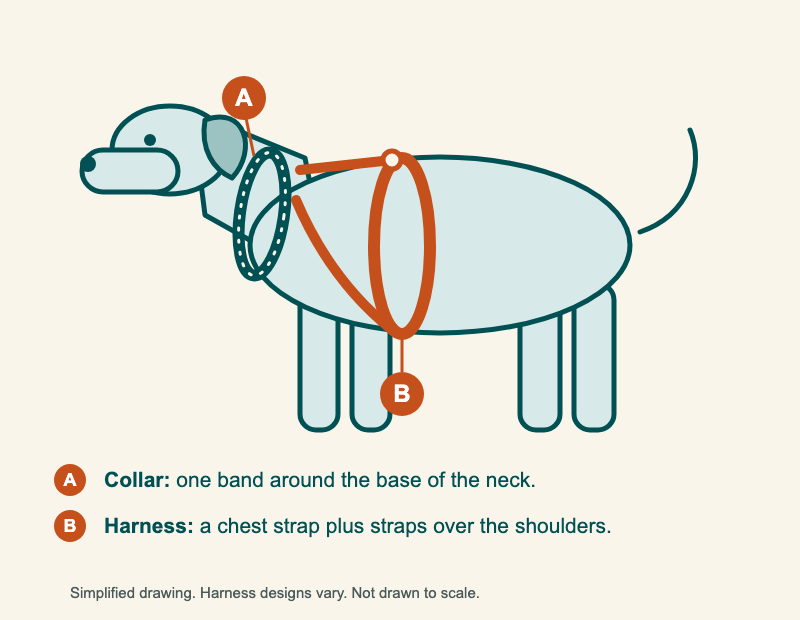
A collar is one band that sits around the base of the neck. It’s simple and quick to fasten. It’s also the usual place for an ID tag.
FOUR PAWS, an animal-welfare charity, says collars can be okay for calm leash-walkers and for holding ID tags, if fitted correctly.
The concern is pulling. The same guide explains that when a dog pulls, force is concentrated on a small area of the neck. It also says sudden or repeated pressure can contribute to injury or distress, and that the risk is higher if the dog is small, flat-faced or has airway or neck issues. If that sounds like your dog, ask your vet.
How a Harness Works and Who It Suits
A harness goes around the chest and over the shoulders. When your dog pulls, the pressure lands on the chest and not the throat. FOUR PAWS calls a well-fitted chest harness the best everyday choice for most dogs. It suggests switching to one if your dog pulls or lunges.
There’s more than one design, and the choice matters. A 2025 review of studies in the journal Animals found no one-size-fits-all device. Its authors suggest the choice should reflect the needs of the dog and the person.
Front-Clip and Back-Clip Harnesses
The review makes two points about where the leash clips on. For dogs that pull, non-tightening front-clip harnesses appear to offer the best balance between discomfort and less pulling. For flat-faced breeds, or when pulling isn’t a concern, back-clip harnesses are suitable.
Look for where the leash ring sits in the product photos. Your dog’s walking style decides which one suits.
What About Head Collars and Martingales?
The same review says tightening harnesses, martingale collars and head collars can pose greater discomfort and should be used with caution. FOUR PAWS adds that a head collar should only be used by owners who have had professional guidance. If you’re considering one, talk to a qualified trainer first.
Harness vs. Collar Side by Side
| Collar | Harness | |
|---|---|---|
| Where the pull goes | The neck | The chest and shoulders |
| Best for | Calm walkers, ID tags | Pullers, and many small or flat-faced dogs |
| Putting it on | One buckle | More straps to adjust |
| What to measure | Neck | Chest, and sometimes neck |
| Teaches loose-leash walking? | No | No |
Does Either One Stop Pulling?
Not by itself. A good harness can make pulling more comfortable, but loose-leash walking is a skill your dog has to learn.
FOUR PAWS says that when pulling is the issue, switching equipment is only part of the solution. It recommends reward-based training and avoiding pain- or fear-based methods.
Try short walks where your dog is rewarded for staying close. If your dog pulls hard, a qualified trainer can help.
Getting the Fit Right
A badly fitted harness or collar can rub or slip, so fit matters as much as the type. Our guide on how to measure your dog for a harness, coat or collar covers each step. A few quick checks:
- Collar: measure around the base of the neck. AKC says you should be able to slide two fingers between the collar and your dog’s neck.
- Harness: chest girth is the key number. Check that two fingers fit under the straps and that nothing rubs behind the front legs.
- Puppies and thick coats: FOUR PAWS says to check fit regularly for growing dogs and thick-coated breeds.
- Between sizes: AKC says to opt for the larger size when in doubt, and to look for adjustable harnesses.
Can You Use Both?
Yes, and many people do. Keep a collar on for the ID tag, and clip the leash to a harness for walks. Take both off or check them if anything rubs. Supervise your dog while they wear new gear.
A Few Options From Our Range
We sell a small range of dog walking gear. These come from overseas warehouses, so the estimated delivery window is on each product page. We haven’t tested them ourselves, so we describe them from the listing details.
- Reflective Dog Harness Vest: a chest harness for medium to large dogs, in sizes M to 2XL, with a chest range of 45 to 105 cm (17.7 to 41.3 in).
- Rope and Cowhide Dog Collar: seven sizes for necks from 21 to 58 cm (8.3 to 22.8 in).
- Nylon Dog Collar with Adjustable Pin Buckle: for neck sizes from 37 to 63 cm (14.6 to 24 in).
Each page has a size guide. If you’re not sure which to pick, send us a message and we’ll help where we can. If something doesn’t fit, our Returns & Refunds page explains what to do.
Quick Answers
Is a harness better for small dogs?
Often, yes. FOUR PAWS says collar risks are higher for small dogs. If your dog has any breathing or neck problem, ask your vet.
Can I use a harness and a collar together?
Yes. Many people keep a collar on for ID and use the harness for the leash.
Will a harness stop my dog pulling?
No. It can make pulling less uncomfortable, but training teaches your dog to walk on a loose leash.
How do I know which size to buy?
Measure your dog first, then compare the numbers with the size guide on the product page. Our measuring guide shows how.
The Short Version
Pick a well-fitted harness for walks, especially if your dog pulls. Keep a collar for ID tags, or use it alone if your dog walks calmly. Measure first, check the fit, and teach loose-leash walking with rewards.
Browse the Walk & Travel category when you’re ready.