
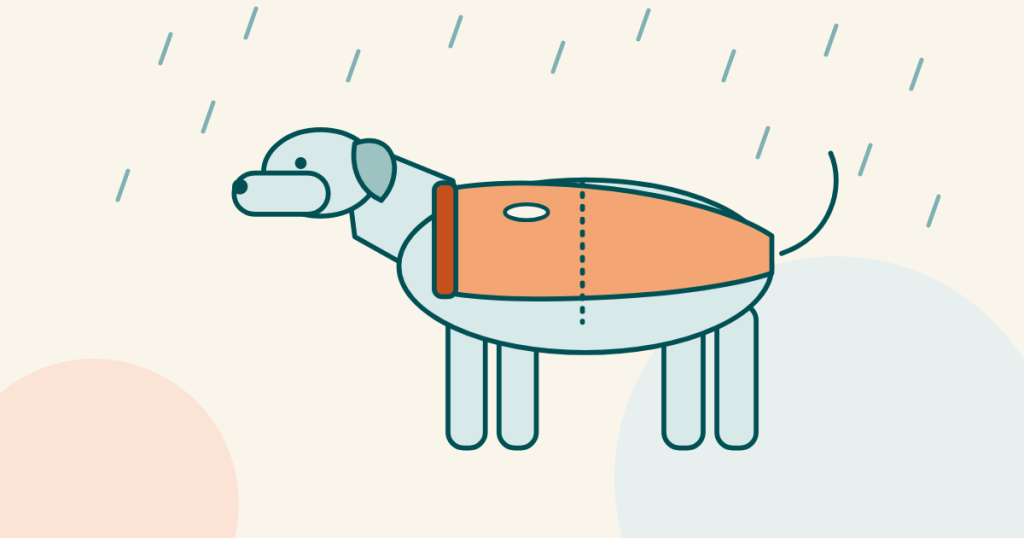
A rainy walk is easier when your dog stays dry and comfortable. But a raincoat only helps if it fits. Too short and the rain finds a way in. Too long and it catches on every step.
This guide covers what to look for, how to read a size chart, and what to do when your dog falls between sizes.
Key Takeaways
- Measure back length first. It usually decides the size, and a coat can’t be stretched lengthways.
- Then check chest girth. Adjustable straps help with girth, not with length.
- Look for adjustable neck and belly closures, a hood or high collar if you want one, and a leash opening if you use a harness.
- Between sizes? Most guides say to size up. Check the listing for its own advice.
What a Dog Raincoat Should Do
A good raincoat covers your dog’s back and chest, stays put when they pull or shake, and doesn’t stop them walking, sitting or toileting. That’s the whole job. Everything else is a bonus.
No coat makes your dog invisible to the weather. Treat “waterproof” and “water-resistant” as two different promises, and read the material line in the listing. If your dog is old, unwell or sensitive to cold, ask your vet what’s right for them.
What to Look For in a Dog Raincoat
Material and Wording
Check how the listing describes the fabric. “Waterproof” and “windproof” are claims the seller makes, so see whether the product page backs them up with a material and a short description. Our Yellow Dog Raincoat, for example, is described as high-density twill with a breathable cotton lining. The listing repeats the supplier’s waterproof and windproof description. We haven’t tested it ourselves.
Closures That Adjust
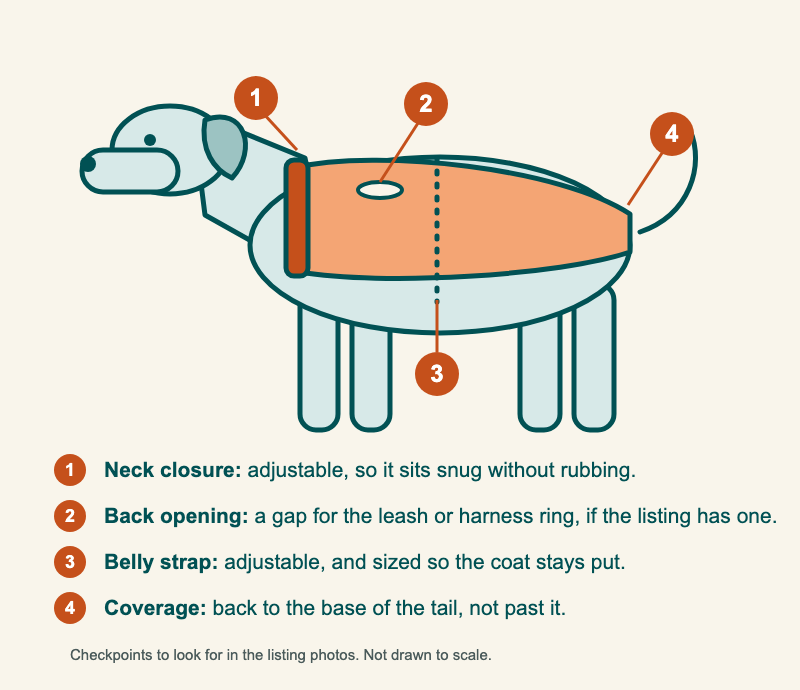
Adjustable closures at the neck and belly make a big difference. Hook-and-loop straps are common, and they help a coat fit a dog who is between sizes. Note that straps fine-tune the girth. They can’t shorten a coat that is too long.
A Leash Opening
If you walk your dog in a harness, look for an opening on the back, for the leash. Not every raincoat has one, so check the photos before you buy.
Belly Cover and Toilet Breaks
Underbelly cover keeps more rain off. But for male dogs, AKC notes that if a garment has no belly cut-out, you may need to shorten the underside fit slightly. Look at where the coat ends on the belly in the photos.
Hood, Collar and Reflective Trim
These are nice extras, not essentials. A hood or high collar can keep rain off the neck, if your dog tolerates it. Reflective trim helps on dark evenings. Only count them if the listing mentions them.
How to Size a Dog Raincoat
You need two numbers, plus the neck if the chart asks for it. Our guide on how to measure your dog for a harness, coat or collar shows each step. Here is the short version, with your dog standing:
- Back length: from the base of the neck, where the collar sits, to the base of the tail.
- Chest: around the widest part of the ribcage, just behind the front legs.
- Neck: around the base of the neck, with room for two fingers.
Back length matters most. A coat that’s too long will catch when your dog moves, and it can’t be stretched lengthways.
Read the Chart in Inches and Centimeters
Many raincoat charts are in centimeters. Divide by 2.54 to get inches. Here’s the chart for our Gold Dog Raincoat with both units. Charts differ between brands, so use the one on your product’s page.
| Size | Chest | Back length | Neck |
|---|---|---|---|
| S | 9.8-13.4 in (25-34 cm) | 10.2 in (26 cm) | 11 in (28 cm) |
| M | 13.4-15.7 in (34-40 cm) | 11.8 in (30 cm) | 13.4 in (34 cm) |
| L | 15.7-18.1 in (40-46 cm) | 13.8 in (35 cm) | 15 in (38 cm) |
| XL | 18.1-20.5 in (46-52 cm) | 16.5 in (42 cm) | 16.5 in (42 cm) |
| 2XL | 20.5-25.2 in (52-64 cm) | 16.9 in (43 cm) | 18.1 in (46 cm) |
| 3XL | 25.2-28.3 in (64-72 cm) | 20.5 in (52 cm) | 20.5 in (52 cm) |
| 4XL | 28.3-32.3 in (72-82 cm) | 23.6 in (60 cm) | 22.8 in (58 cm) |
| 5XL | 32.7-36.6 in (83-93 cm) | 29.9 in (76 cm) | 24.8 in (63 cm) |
A Worked Example
Say your dog’s back is 14 in (35.6 cm) and the chest is 19 in (48.3 cm). Using the chart above:
- The back length fits an L (13.8 in) best. An XL (16.5 in) would be about 2.5 in longer.
- The chest falls in the XL range (18.1-20.5 in). An L tops out at 18.1 in, so it would be about 0.9 in snug.
When the numbers disagree like this, it’s worth a message before you order. Straps can give a little on girth, but not on length, and an overly long coat catches. Ask us and we’ll help where we can.
What If Your Dog Is Between Sizes?
Most brands say to size up, and our own raincoat pages give the same advice for these two coats. Read the notes on the product page, since a brand may advise otherwise.
Check the Fit When It Arrives
Try the coat on indoors before the first wet walk. Then check:
- You can slide two fingers under the neck and belly straps.
- Nothing rubs behind the front legs or around the neck.
- The coat ends at the base of the tail and doesn’t drag.
- Your dog can walk, sit and turn normally.
- The leash opening, if there is one, lines up with your harness ring.
Supervise your dog the first time they wear it. If it isn’t right, our Returns & Refunds page explains what to do. Items ship from overseas warehouses, so the estimated delivery window is on each product page. Order before you need it, not on the morning of a downpour.
Quick Answers
Is waterproof better than water-resistant?
They’re different promises, and sellers use them loosely. Check the material and read the listing. If the page doesn’t say how the fabric is treated, ask.
Does my dog need a raincoat?
Not always. Many dogs are fine in the rain. A coat is about comfort, and about less mud and wet fur at home. If you’re concerned about your dog’s health in cold, wet weather, ask your vet.
Can I use a raincoat over a harness?
It depends on the coat. Some have an opening on the back for the leash or harness ring. Look at the listing photos, and size by your dog’s measurements, not their harness.
How do I clean a dog raincoat?
Follow the care label. Wipe-clean fabrics are easiest, and many coats can be rinsed and hung to dry. Some can go in the machine on a gentle cycle, but others can’t, so check before you wash.
The Short Version
Measure the back length first, then the chest. Pick the size that fits the back, and check the chest against the chart. Look for adjustable closures, and size up if you’re in between.
Ready to look? Browse the Clothing category.