
“My cat won’t use the litter tray.” It’s a common worry, and sometimes the setup is part of the cause. Setup is also the part you can control.
This guide takes you through five steps: the tray, the spot, the litter, the cleaning and a few extras. It also covers what to do when your cat stops using the tray. We sell litter gear, but the biggest wins here cost nothing.
Key Takeaways
- Pick a tray about one and a half times your cat’s length.
- Put it in a quiet spot, away from food, water and busy areas.
- Scoop at least twice a day, and wash the tray on a schedule.
- Offer one tray per cat, plus at least one extra.
- If your cat suddenly stops using the tray, see your vet first.
What You’ll Need
- A litter tray and a scoop.
- Litter. Ask the shelter or breeder what your cat used as a kitten.
- A mat for the floor around the tray.
- Hot water and a biological detergent for washing.
- A bin or bags for used litter.
Want it on paper? Download our printable Litter Routine Tracker (PDF). It has a weekly scoop grid and space for wash dates.
Step 1: Choose the Right Tray
Size matters more than most people expect. International Cat Care says the ideal tray is about one and a half times your cat’s length, measured from nose to base of tail. It adds that many standard trays are too small.
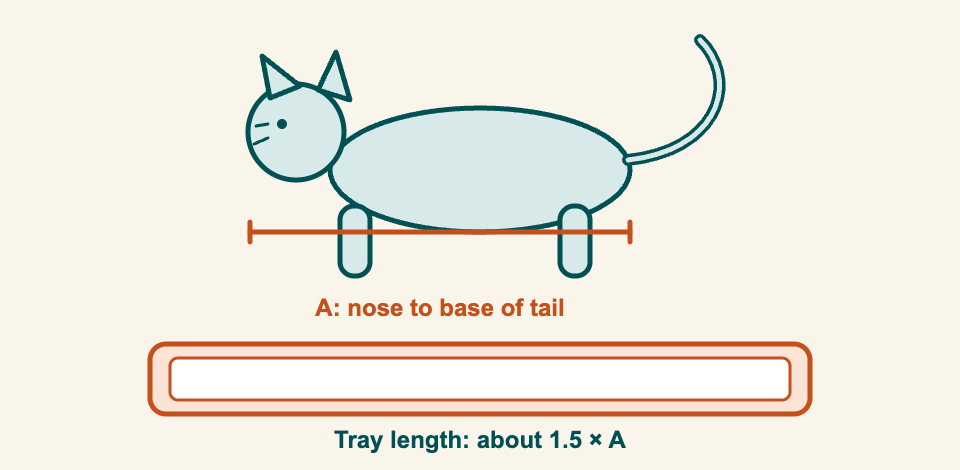
- Shape: International Cat Care recommends rectangular trays over corner or oval ones, because they give more room.
- Open or covered: try both if you’re unsure. Soiled litter can be harder to remove from a covered tray, and some cats feel vulnerable in a small covered one.
- Kittens and older cats: kittens can start with a smaller tray and move up. Cats with reduced mobility do better with lower sides.
Our Open Cat Litter Box with Removable High Sides has an open top. The clear sides snap off for cleaning or for a lower entrance. The small size is 43 × 28 × 18 cm (17 × 11 × 7 in). The large is 52 × 39 × 20 cm (20.5 × 15.4 × 7.9 in). A scoop is included. If your cat’s length times 1.5 is more than 52 cm, you’ll want a bigger tray.
Step 2: Pick the Spot
Choose somewhere quiet, away from food, water and busy areas of the home. International Cat Care says cats are often reluctant to use trays near cat flaps or full-length glass windows, because they feel a threat from outside.
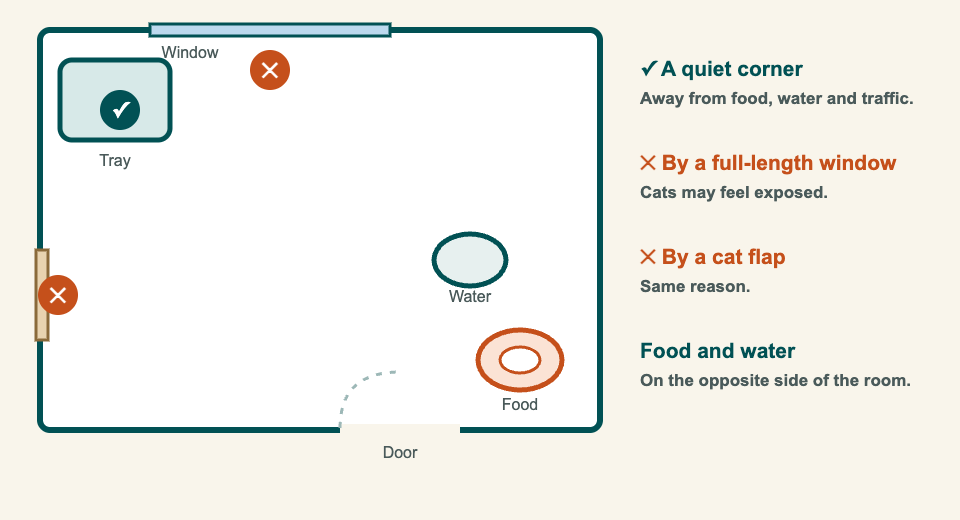
Setting up for a new cat? Our guide to what to buy before you bring a cat home shows a whole quiet room. The tray sits in one corner, with food opposite.
Step 3: Choose the Litter and Fill the Tray
Cats usually stick with what they know. International Cat Care says to keep to the material your cat used as a kitten, because preferences develop early.
- Type: fine, sand-like litter is probably ideal, and many cats prefer clumping litter because it’s easier to keep clean.
- Depth: research shows cats prefer about 3 cm (1 in) of litter.
- Scent: scented litter, liners and deodorants can put cats off. Skip them.
Step 4: Keep It Clean
A dirty tray is a common reason cats look elsewhere. International Cat Care says cats are less likely to use a tray that is already soiled.
- Scoop at least twice a day. Remove clumps and droppings.
- Top up the litter to about 3 cm.
- Wash the tray on a schedule. Empty it and wash it with fresh litter every 2 to 4 weeks for clumping litter, or weekly for non-clumping litter.
- Use the right cleaner. Hot water and a biological detergent work, and you should avoid heavily scented ones. Rinse and dry the tray well.
Some cloudy-in-water disinfectants, such as those containing chloroxylenol, are toxic to cats. Check the label before you use anything on the tray.
Step 5: Add Extras
A few extras make the area easier to live with.
- A mat. It catches litter that sticks to paws. Our Waterproof Double-Layer Cat Litter Mat is double-layer EVA that traps litter and is waterproof. It comes in four sizes, from 30 × 45 cm to 55 × 70 cm. Prefer a washable option? Our Double-Layer Washable EVA Litter Mat comes in six sizes.
- More trays. With more than one cat, offer one tray each plus at least one extra. Space them around the home, away from food and water, so one cat can’t block the others.
- Skip self-cleaning trays. International Cat Care says their random movements and noises can startle cats.
When Your Cat Stops Using the Tray
Start with your vet. The ASPCA says a cat that goes outside the tray should be checked by a veterinarian for an underlying medical condition. Do this before you assume the cause is behavioral.
Some signs need quick attention. A male cat that cannot pass urine needs immediate veterinary care, the ASPCA says. Straining, frequent small amounts, or blood in the urine are also reasons to call your vet.
If your vet finds nothing, look at the setup. These are the common ones from International Cat Care’s guidance:
- The tray is dirty.
- The litter or a liner is scented.
- The tray is too small, or has a lid or flap your cat dislikes.
- The tray is near a full-length window, a cat flap or a busy area.
Quick Answers
How many trays do I need?
One per cat, plus at least one extra. Keep them in different places, so one cat can’t block the others.
How deep should the litter be?
International Cat Care says about 3 cm (1 in).
Are covered trays better?
Not always. Many owners like them for privacy, but some cats dislike them. Try both to see what your cat prefers.
How often should I wash the tray?
Every 2 to 4 weeks for clumping litter, or weekly for non-clumping litter. Scoop at least twice a day in between.
The Short Version
Choose a tray about 1.5 times your cat’s length. Put it in a quiet corner, away from food and water. Use the litter your cat knows, scoop twice a day and wash on a schedule. If something changes, ask your vet first.
Ready to shop? Browse our Grooming & Litter category, or see everything in Cats. If something doesn’t fit, our Returns & Refunds page explains what to do. Questions first? Send us a message. And keep the Litter Routine Tracker near the tray.